Reflections on My Research Paper: Brain Tumor Detection Using Machine Learning

Veda Salkar Last updated on 6 April 2026
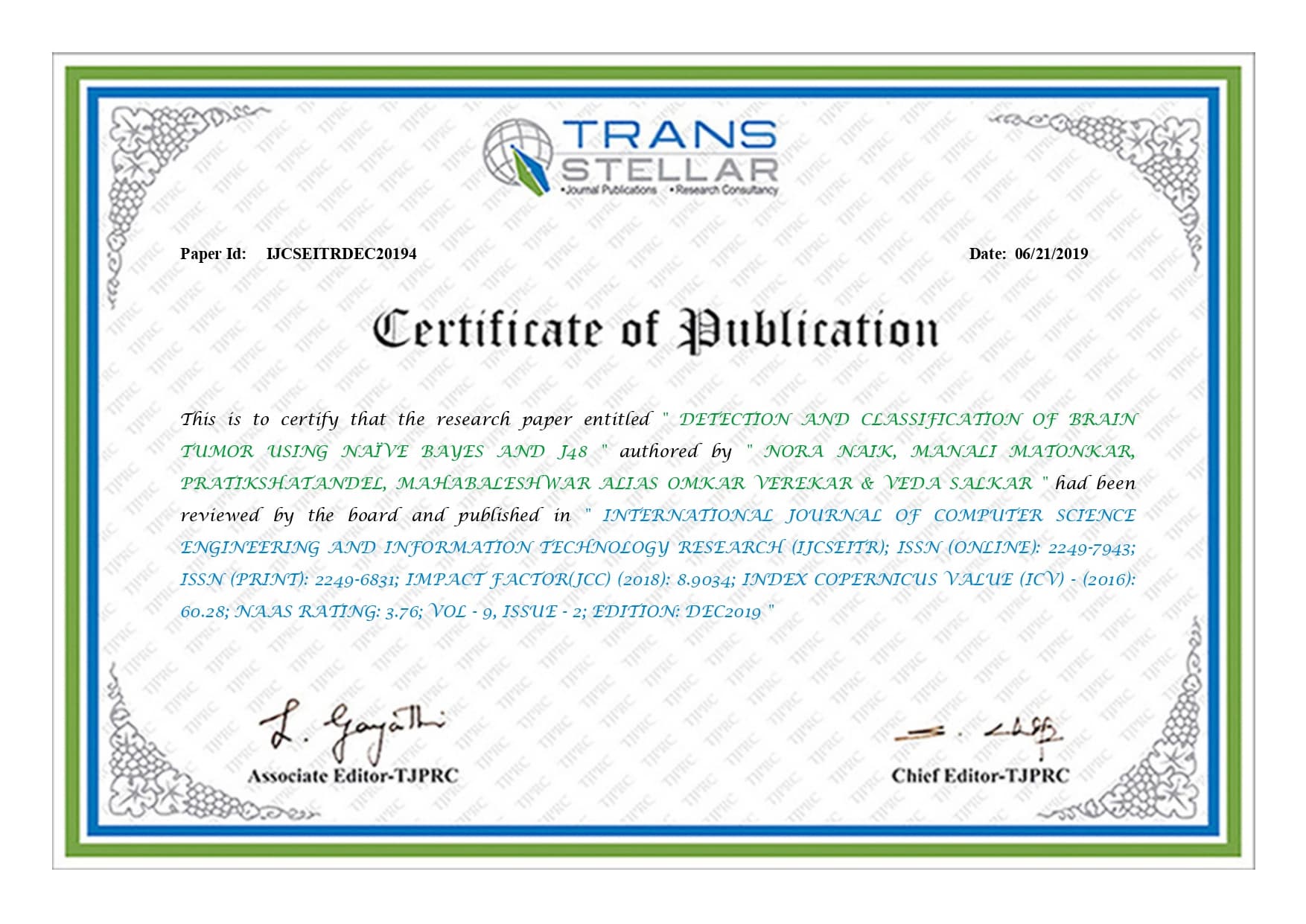
Publishing my research paper on Detection and Classification of Brain Tumor using Naïve Bayes and J48 Algorithm in the International Journal of Computer Science Engineering and Information Technology Research was a significant milestone in my academic journey. Looking back, this project was much more than a technical exercise, it was a deeply formative experience that shaped my approach to research, teamwork, and problem-solving.
The Project at a Glance
This project focused on leveraging image processing and data mining techniques to improve the detection and classification of brain tumors. Traditionally, tumor detection in MRI or CT scans is performed manually by physicians, which can be time-consuming and prone to variability. Our goal was to design a system that could automate this process, reducing diagnosis time while improving accuracy.
By extracting relevant features from tumor regions and applying classification algorithms like Naïve Bayes and J48, we aimed to distinguish between malignant and benign tumors efficiently. The project required not only technical implementation but also strict adherence to research standards and documentation practices.
My First Research Paper Experience
This was my first experience writing and publishing a research paper and it was far from easy. What many people don’t see behind a published paper is the sheer number of revisions that go into it. We went through countless iterations, making corrections, refining explanations, improving clarity, and ensuring everything met academic standards.
At times, it felt overwhelming. But in hindsight, this process taught me one of the most valuable lessons in research: patience. Good work takes time, and meaningful results are often the outcome of persistent refinement.
Leading a Team: Lessons in Collaboration
Since this was a group project, teamwork played a central role. I took on a leadership position, which brought its own set of challenges and learning opportunities. Coordinating tasks, ensuring everyone stayed aligned with the project goals, and maintaining clear communication were critical to our success.
I learned that effective collaboration isn’t just about dividing work, it’s about creating an environment where everyone feels responsible and motivated to contribute. There were moments where we had to step in for each other, resolve misunderstandings, and keep pushing forward despite setbacks. These experiences helped me develop stronger communication and leadership skills.
Technical and Personal Growth
On the technical side, this project deepened my understanding of image processing and machine learning algorithms. More importantly, it showed me how theoretical concepts can be applied to solve real-world problems, particularly in a domain as impactful as healthcare.
On a personal level, it taught me resilience. Whether it was debugging code, refining our methodology, or rewriting sections of the paper, each challenge pushed me to improve and stay committed to the end goal.
Final Thoughts
This project and publication marked the beginning of my journey into research and problem-solving at a deeper level. It was a combination of technical learning, teamwork, leadership, and perseverance.
If there’s one key takeaway from this experience, it’s this: meaningful achievements rarely come easily. They require patience, collaboration, and a willingness to keep improving, even when the process feels exhausting.
Looking back, I’m proud not just of the final outcome, but of everything I learned along the way.
Related

From Code to Installable Software: How to Package a React + Python Application
Learn how to turn a React + Python application into a Windows desktop installer. This guide explains the packaging process using React, FastAPI, PyInstaller, Electron, and electron-builder, from building the backend and frontend to creating and testing the final .exe installer.
Git & GitHub Cheat Sheet: Essential Commands and Beginner Guide
A beginner-friendly guide to Git and GitHub covering essential concepts, core commands, branching workflow, and step-by-step setup instructions to help developers manage and collaborate on code efficiently.
Why Developers Love shadcn/ui for Modern Frontend Development
Explore how shadcn/ui simplifies frontend development by offering accessible, customizable components that you own and control within your own codebase.

Industrial Sensor Data Visualization: Charts That Reveal What Matters
Master the essential chart types for sensor data analysis, including line charts, 3D scatter plots, and surface plots to unlock insights from IoT data streams.

The Digital Gateway: Understanding the Power of SEO
Learn why Search Engine Optimization (SEO) is the backbone of digital visibility and how it propels your website to the top of Google search results.